
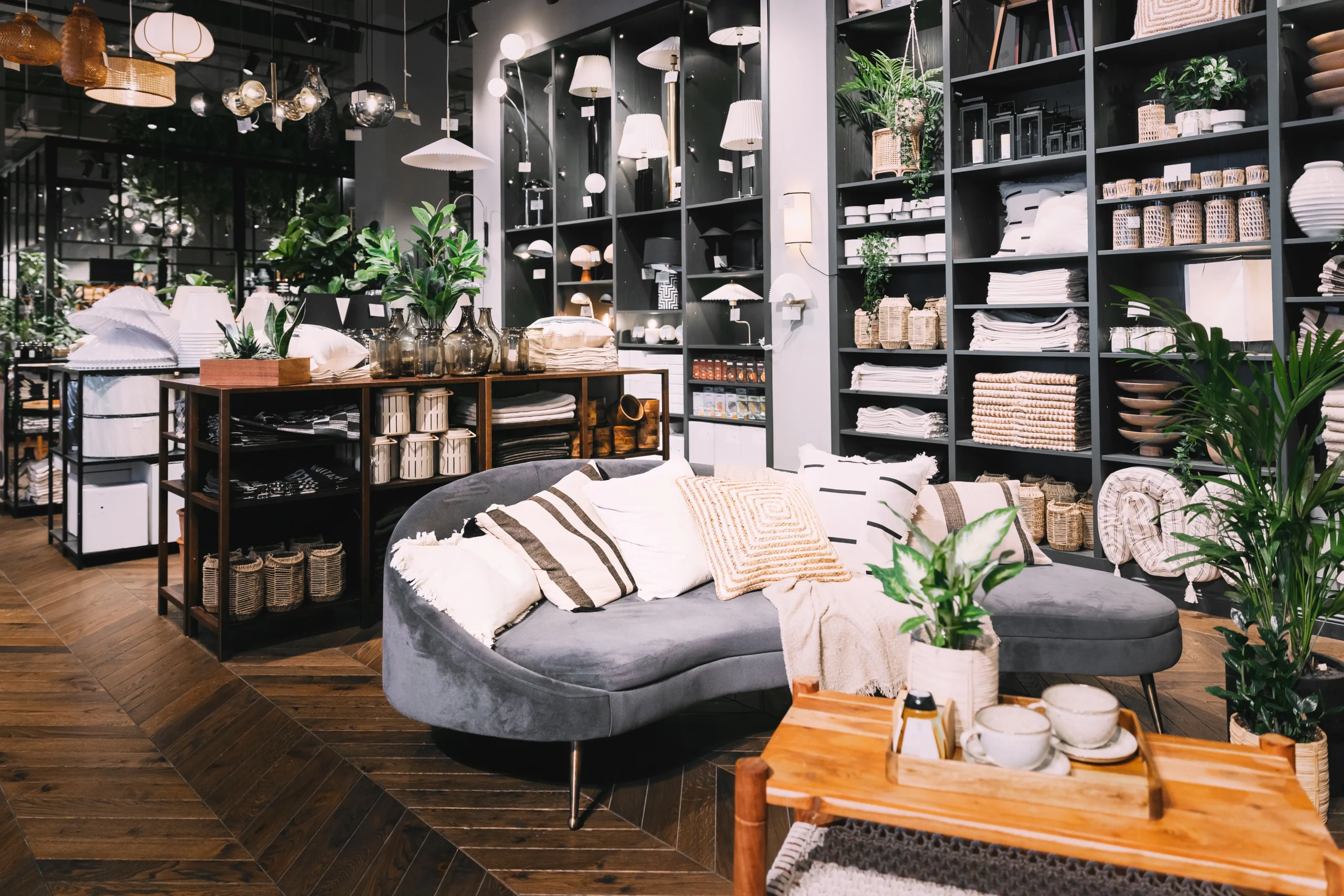
The importance of store design lies in its ability to turn a visit into an experience. When customers feel comfortable, inspired and engaged, they stay longer and interact more with products.
A successful store design helps to:
In crowded retail markets, store design becomes a key differentiator that sets brands apart.
Layout and Spatial Planning
The foundation of store design is layout. A clear and intuitive layout allows customers to navigate the space effortlessly. Poor layout creates confusion and reduces engagement.
Common layout strategies include:
Choosing the right layout depends on the product category, store size and customer expectations.
Lighting is one of the most powerful elements of store design. It affects mood, focus and perception.
Layered lighting approaches combine:
Proper lighting enhances textures, colors and materials, making products more appealing.
Materials and colors define the emotional tone of a store. Natural materials create warmth, while metal and glass communicate modernity and precision.
Color psychology plays a major role in store design:
Consistency in material and color usage reinforces brand identity.
Technology has become an essential component of contemporary store design. Digital tools improve both planning and in store experience.
Examples include:
When integrated thoughtfully, technology enhances engagement without overwhelming the physical environment.
Sustainability is no longer optional in store design. Brands increasingly consider environmental impact when designing retail spaces.
Sustainable store design focuses on:
These choices reduce waste and appeal to environmentally conscious consumers while supporting long term cost efficiency.
Beyond function and aesthetics, store design influences emotion. Atmosphere, scale and sensory details shape how customers feel inside a space.
A well designed store can:
This emotional layer is what transforms a store from a place into an experience.
The future of store design will be driven by flexibility, personalization and experience. Retail spaces will continue to evolve as hybrid environments where physical and digital interactions merge.
Key trends include:
Brands that invest in forward thinking store design will remain relevant in a changing retail landscape.
Ultimately, store design is not a decorative choice. It is a strategic investment that impacts brand perception, customer satisfaction and commercial success.
A thoughtfully designed store creates clarity, comfort and connection. It supports storytelling, enhances functionality and builds lasting relationships between brands and customers.