
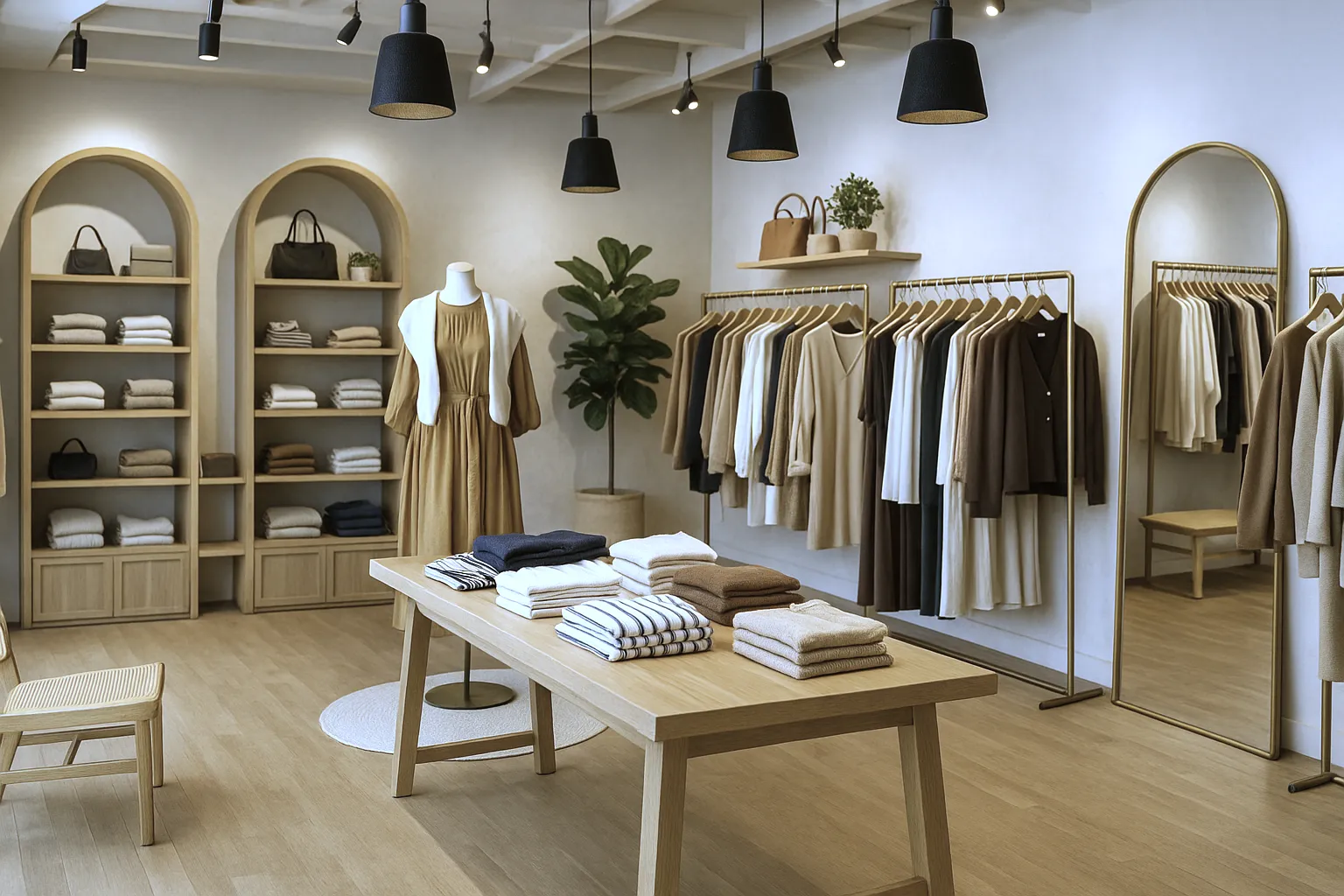
Boutique design has become increasingly influential as consumers seek more than a transaction they seek connection. A well-designed boutique can:
In a competitive landscape, boutique design offers retailers the opportunity to stand out through atmosphere, story and craftsmanship.
At the heart of boutique design is atmosphere. Each boutique should express a clear theme tied to the brand’s essence. Whether inspired by minimalism, vintage charm, luxury cues or natural textures, the theme acts as the backbone of the design.
Lighting, scent, music and decor work together to bring the theme to life. The result is an environment customers feel rather than simply see.
Boutique design thrives on sensory depth. Materials such as natural wood, brushed metal, linen fabrics, ceramics or handcrafted details enrich the space. Texture variation adds warmth and dimension, making the store feel human and inviting.
Sustainable, artisanal and locally sourced materials are often preferred, reflecting the boutique’s dedication to authenticity.
Boutiques typically feature flexible, non-linear layouts. Instead of a predictable grid, boutique design uses open, fluid pathways that encourage discovery. Strategic placement of focal points such as sculptural displays or feature walls draws the customer deeper into the space.
The layout supports exploration, making each visit feel unique.
Lighting is a critical component of boutique design. Soft, warm lighting creates intimacy, while accent lighting highlights craftsmanship and details. Every lighting choice should enhance mood, express brand character and spotlight key product stories.
Boutique design elevates product curation into an art form. Rather than overwhelming customers with quantity, boutiques present fewer items with greater intention. Display tables, glass cases, pedestals and wall units frame each product like a piece of art.
This approach increases perceived value and creates a premium experience.
Boutique environments influence customer emotions in ways that large-scale retail spaces often cannot. Warm textures evoke comfort. Artistic displays spark inspiration. Soft lighting encourages slower browsing.
These elements collectively create an experience that feels personal, intentional and inviting.
Boutique design also taps into storytelling psychology. When products are surrounded by thoughtful design elements, customers naturally form stronger associations with the brand.
While boutique design is often associated with tradition and craftsmanship, technology plays an increasing role. Digital integrations can enhance intimacy without overpowering the aesthetic:
Technology ensures a seamless experience while maintaining the boutique’s artistic soul.
Sustainability and boutique design complement each other naturally. Smaller spaces allow for more deliberate and eco-conscious decision-making. Boutique designers often incorporate:
Sustainable boutique design not only benefits the environment but also aligns with consumer values.
A boutique is more than a store it is a brand signature. It reflects personality, values and craftsmanship. Every design decision contributes to the narrative. A well-executed boutique design:
By focusing on authenticity and detail, boutique design becomes a strategic tool for long-term success.
As retail continues to evolve, boutique design will play an essential role in shaping meaningful shopping experiences. Personalized spaces, artistic elements and emotional storytelling will redefine how customers connect with brands.
Boutique design is not a trend it is a philosophy. A philosophy centered on crafting spaces that feel personal, purposeful and unforgettable.