
As competition in the retail sector continues to intensify, physical stores have evolved beyond simple points of sale and become experience‑driven spaces that reflect a brand’s identity, values, and vision. In this transformation, retail store design has emerged as one of the most critical factors shaping customer perception and directly influencing sales performance. A well‑designed store increases dwell time, strengthens product interaction, and positively impacts purchasing decisions.
Retail store design represents a holistic approach that prioritizes functionality as much as aesthetics. It requires the careful coordination of multiple elements such as spatial planning, customer flow, lighting, material selection, and product presentation. A successful retail space must be visually compelling while also supporting operational efficiency.
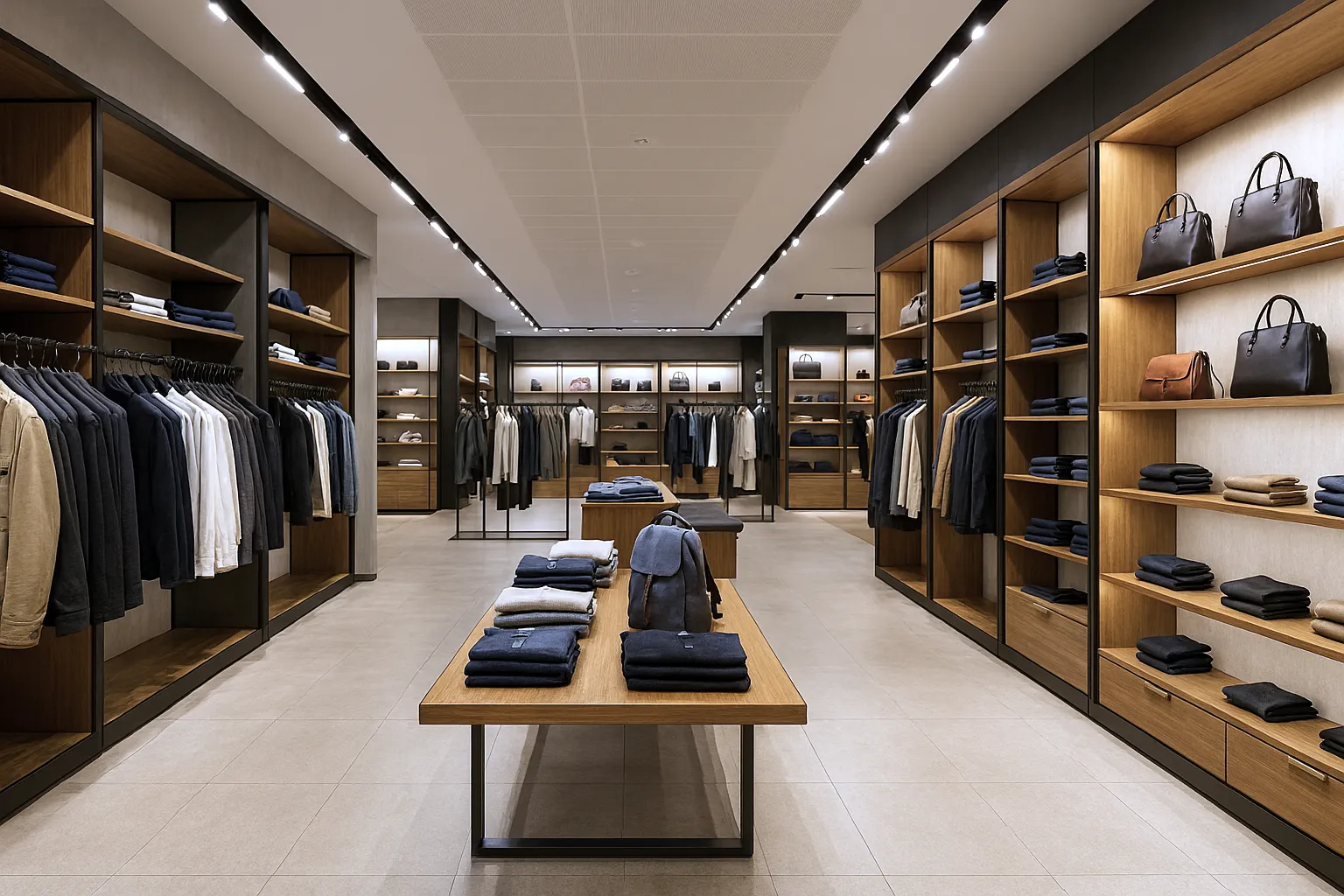
At the core of an effective retail store design process lies a deep understanding of customer behavior. Circulation areas within the store should be planned to allow customers to move comfortably and intuitively. Wide, fluid pathways enable visitors to navigate the space naturally without feeling restricted or guided forcefully. Clearly defined product zones enhance perception and make the shopping journey easier.
Layouts that support the customer journey also help highlight key product categories while increasing cross‑selling opportunities. For this reason, retail store design should be seen not only as a visual arrangement, but as a strategic sales tool.
Lighting is one of the most influential components of retail store design when it comes to defining atmosphere. Proper lighting enhances product visibility while shaping the overall perception of the store. The balance between warm and cool lighting should be carefully planned according to the target audience and brand positioning.
Accent lighting draws attention to specific products, while general lighting ensures customer comfort. A well‑designed lighting strategy contributes to a store that feels more open, inviting, and professional.
The materials used in retail store design directly reflect the perceived quality of a brand. A balanced combination of materials such as wood, metal, glass, and plexiglass adds character and depth to retail spaces. Durable, long‑lasting materials provide solutions suitable for intensive use and support sustainability goals.
Equally important is the manufacturability of the design. Designs that can be implemented smoothly on site, with accurate measurements and clear detailing, help prevent time loss and cost overruns. Therefore, retail store design requires strong alignment between design intent and production execution.
An effective retail store design project does not end with the design phase alone. Project planning, production, logistics, installation, and after‑sales support must all be considered as parts of a single, integrated process. Coordinated management of these stages ensures that store projects are completed on time and at the desired quality level.
Integrated process management saves time for retail brands while maintaining consistent quality standards. This approach is particularly advantageous for multi‑location store projects.
Today, retail store design is increasingly shaped by sustainability and flexibility. Modular structures, adaptable display units, and reconfigurable spaces allow stores to respond easily to seasonal campaigns and changing product assortments.
Technology‑integrated retail environments provide measurable data that enables performance analysis and optimization. As a result, stores become dynamic spaces capable of meeting not only today’s requirements but also future expectations.
In conclusion, retail store design is a strategic investment where aesthetics, functionality, technology, and sustainability come together in balance. Well‑designed retail spaces strengthen competitive advantage while delivering powerful and memorable customer experiences.