
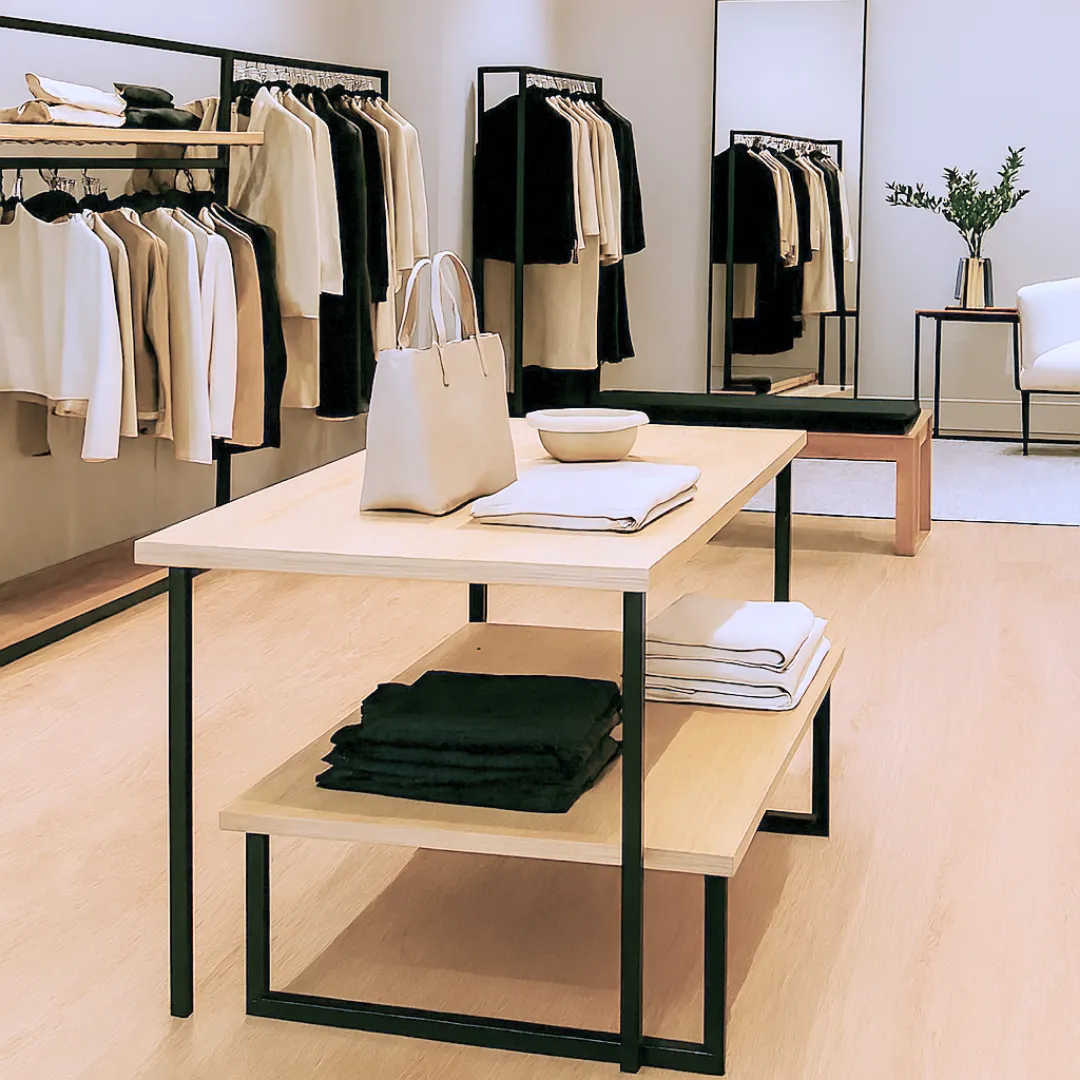
Store furniture refers to all physical fixtures and fittings used within a retail environment to display, organize, and enhance products. These include shelving systems, counters, display tables, wall units, and seating arrangements. Well-designed store furniture not only organizes the retail space but also directs the customer’s attention strategically, guiding them through a memorable journey.
In essence, store furniture transforms a simple retail space into a well-structured, immersive environment that promotes both comfort and engagement.
Store furniture serves as the backbone of effective retail design. It brings order, functionality, and visual balance to the store environment. Here are the key functions it fulfills:
These are essential elements of any retail environment. Shelving systems, both wall-mounted and freestanding, offer efficient product display while maintaining organization. In fashion stores, adjustable racks and modular shelves allow brands to redesign layouts quickly without reconstruction.
Cashier counters, reception desks, and information points form the final touchpoint between the brand and the customer. Ergonomic design and aesthetic coherence are crucial to ensure smooth operations and reinforce the brand image.
Freestanding tables or island displays are focal points that highlight new arrivals, featured collections, or promotional items. They invite customers to explore products up close, promoting impulse buying and interaction.
Modern store concepts often integrate seating to create a relaxed and customer-friendly environment. Whether it’s a lounge corner, fitting room seating, or waiting area, this type of furniture enhances dwell time and overall satisfaction.
Efficient store furniture doesn’t stop at the visible sections. Functional storage solutions help staff manage inventory effectively, ensuring that the sales floor remains organized and clutter-free.
The materials used in store furniture define not only its aesthetic appeal but also its durability and sustainability. Popular choices include:
Today’s retailers are increasingly seeking sustainable materials to reduce environmental impact while maintaining design excellence.
Custom-designed store furniture is a powerful tool for differentiation. Tailored solutions allow brands to design unique layouts that align perfectly with their identity and customer behavior. From luxury boutiques to high-volume retail stores, bespoke furniture enhances visual storytelling and supports the customer journey.
For instance, ONTO’s approach to boutique store design demonstrates how custom materials and craftsmanship turn functional furniture into aesthetic statements. Each piece becomes a reflection of the brand’s ethos, ensuring consistency across all locations.
Digital tools and production technologies have revolutionized store furniture manufacturing. Computer-aided design (CAD), CNC cutting, and automated production systems ensure precision and repeatability. These technologies allow complex designs to be executed with speed and efficiency while maintaining exceptional quality.
Furthermore, smart store furniture integrated with digital elements like LED lighting, interactive screens, and sensor-based displays creates dynamic shopping environments that captivate modern consumers.
Sustainability is no longer a trend but a necessity. Eco-conscious store furniture design focuses on recyclable materials, energy-efficient production methods, and long-lasting durability. Choosing modular, reconfigurable furniture also minimizes waste by allowing reusability across campaigns or even store relocations.
Brands that prioritize sustainable design not only contribute to environmental preservation but also strengthen customer trust and loyalty.
Ultimately, store furniture is more than functional equipment it’s a brand statement. Every piece tells a story: of craftsmanship, innovation, and care. When designed thoughtfully, furniture enhances both the customer journey and the emotional connection between brand and visitor.
Store furniture shapes the foundation of every retail experience. It combines form and function, aesthetics and utility, identity and engagement. From design and material selection to production and installation, furniture decisions define how customers perceive and interact with a brand.
Investing in well-crafted, sustainable, and brand-aligned store furniture isn’t just about aesthetics it’s about building the physical essence of your brand’s story.